First things first – let's navigate the terminology. SEO, AIO, GEO, what other acronyms are there?
- SEO – an old-school search engine optimization, no longer description needed here.
- AIO – Artificial Intelligence Optimization, which emerged as a result of the rising popularity of AI assistants. AIO can be referred to as the use of AI tools for better and more efficient search engine optimization – think of the use of ChatGPT for content writing and similar applications. Another AIO description comes from the growing popularity of using AI instead of search engines or as an add-on to search engines. In this case, we view AIO as an engine to optimize for, enabling AI to find our website's content easily.
- GEO – generative engine optimization – is yet another acronym that refers to a process of website optimization for generative engines, so they (engines) could easily read and understand what the website and its content are about.
There is one other worth mentioning: AEO, which stands for answer engine optimization. The acronym is different, but in general, it means the same as the three others above.
For clarity, it is also essential to examine AI Search from three functional perspectives.
- The first relates to searches conducted within generative AI tools like ChatGPT.
- The second perspective has to do with AI overviews that appear when a user actually searches on Google, but receives AI-generated results, which augment traditional SERPs by presenting machine-generated insights above organic listings.
- And the third involves AI-integrated browsers, such as Microsoft Edge with Copilot, Opera's AI features, and You.com's AI-enhanced search interface, which provide real-time insights, contextual suggestions, and interactive summaries as users navigate the web, blending browsing and AI assistance.
Are people actually changing how they search?
Is AI actually going to dominate traditional search from now on? Or is it better to ask this question: Will people change their regular Google search behavior towards using AI-aided search?
Well, the answer is Yes, but it has a very valuable context. Recent studies by companies like Semrush, Ahrefs, and others sitting on actual traffic data show that users are actually changing their search behaviour. What's very interesting is that users are changing how they query –- previously, a typical user used to Google "wedding dresses NY" and now they are doing long-tail and more conversational queries like "What are the best wedding dresses stores in NY?" SEO experts were working on long-tail keywords long before AI entered the scene, but those queries weren't always conversational; instead, they were more like a set of keywords stuck together: "best wedding dress NY buy".
Traffic down, revenue up?
This is a fascinating phenomenon that began even before AI search flooded the market, but became more visible afterward.
Rand Fishkin from SparkToro describes this trend in detail in his post. Search engines and AI platforms increasingly answer queries directly (zero‐click searches), reducing the need for users to click through to a site. Therefore, AI engines influence users' decisions to buy, but not necessarily send traffic to their website. All of this results in more sales happening right after the first visit to the website, though we somewhat lose the value of awareness and educational content in regard to traffic. However, this type of content serves a purpose to train AI, and it means we still need it, actually, a lot of it.
What about Google's revenue?
At first glance, AI Overviews dominating the top of SERPs may look like Google is undermining its own business model. Traditionally, paid ads appeared above well-optimized organic results – a placement that has historically generated tons of Google's revenue. With AI Answers now occupying prime real estate and driving more zero-click searches, it would be logical to assume a significant loss in ad-driven revenue. However, Google isn't leaving monetization on the table. Google has begun integrating ads directly into AI Overviews and other AI-powered search experiences so that advertising still has visibility even when traditional search results are pushed down.
According to Google's own marketing blog, Search and Shopping ads can appear directly within AI Overviews when relevant to the search query, complete with the standard "Sponsored" label to maintain transparency. These ads are designed to help users discover brands and products right at the moment they are asking questions.
Furthermore, Google has confirmed that this new ad placement is expanding beyond mobile to desktop in the U.S. and other markets, and that ads can appear above or below AI Overviews depending on relevance and query intent.
AI Search and its limitations: from user query to AI overview result
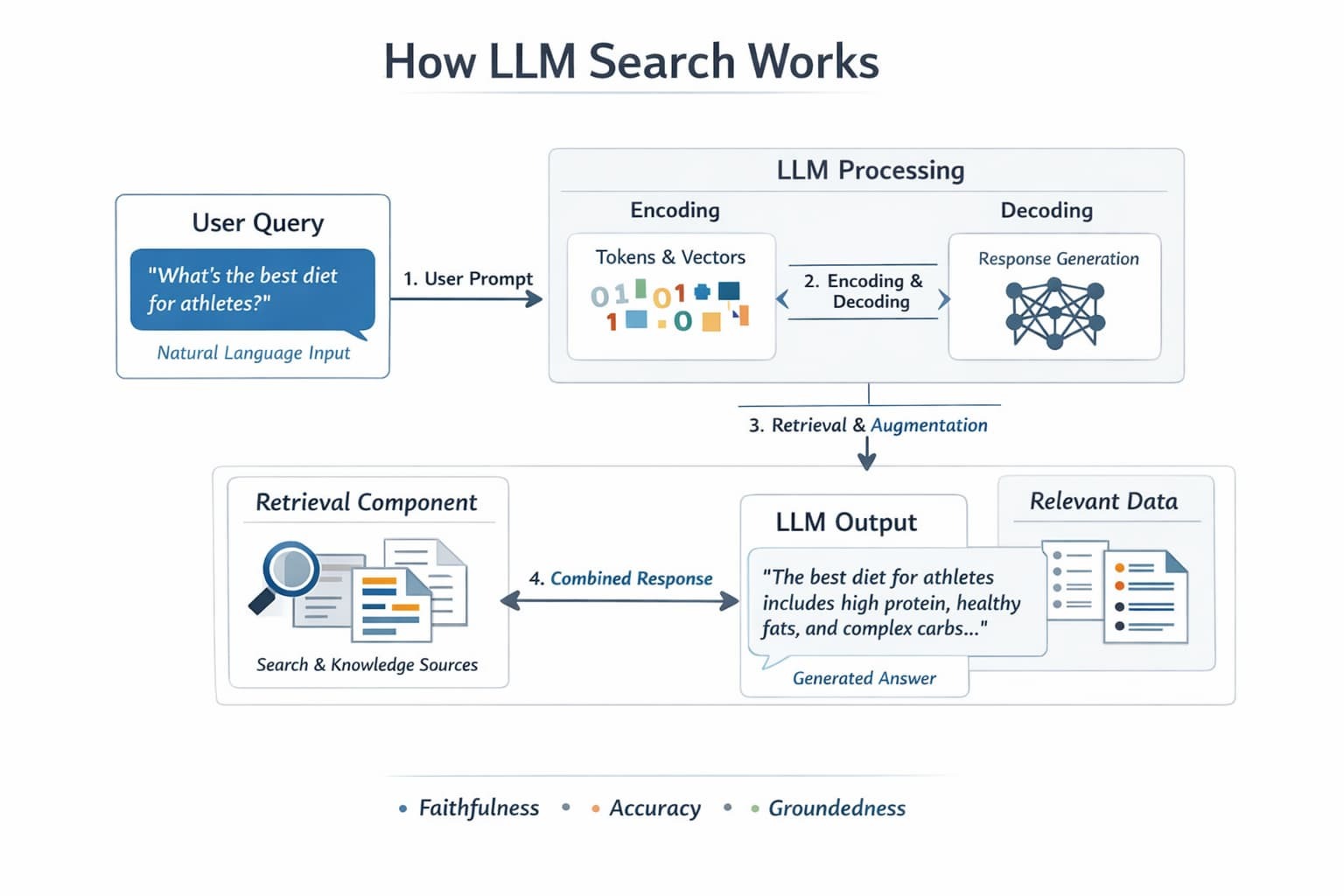
The nature of search in AI engines is different from what we are used to with conventional search engines. While Google and other traditional search engines heavily rely on keyword density, backlinks, and an index-based approach, AI engines retrieve information based on a mixture of user prompts, contextual probability, and semantic understanding. Instead of matching exact keywords, AI models interpret user intent, analyze relationships between concepts, and generate answers that synthesize information from multiple sources.